
Posted by LightbulbWholesaler.com on 12th Aug 2026
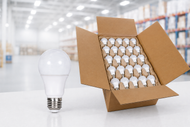
If you’ve ever placed a large order for LED bulbs and ended up receiving the wrong ones (wrong base, unexpected brightness, or the wrong color temperature), then you already know why this checklist exists.
A single mismatched bulb is easy enough to replace, but hundreds of mismatched bulbs are a real problem. Suddenly you get to deal with returns, project delays, or a hallway that’s half warm white and half daylight until the replacement shipment arrives.
Before you place a bulk order for LED screw-in bulbs, take a few minutes to check the base type, lumen output, color temperature, CRI rating, and dimming compatibility. Missing even one of these details can leave you with boxes of bulbs that don’t work as expected. A quick review can save you from expensive returns and wasted time.
Let’s discuss five things in detail you should check before buying screw LED light bulbs in bulk!
-
Confirm the Correct Base Type
This is the most common mistake wholesalers make while buying bulk LED screw-in bulbs, and it’s easy to overlook. When you’re ordering from a product specification sheet or a photo instead of checking the actual fixture, it’s easy to assume the base type is correct. But screw-in LED light bulbs come in different base sizes, and they are not interchangeable. If the bulb doesn’t fit the socket, it’s unusable, no matter how well it performs.
The most common screw-base types include:
Medium E26: The standard base used in most residential and commercial fixtures across North America.
Candelabra E12: A smaller base commonly found in chandeliers, wall sconces, and decorative light fixtures.
Intermediate E17: A mid-sized base often used in ceiling fans, appliance lights, and certain specialty fixtures.
Mogul E39: A larger base designed for high-output lighting in warehouses, factories, and other industrial spaces.
Before placing a bulk order, remove one of the existing bulbs from the fixture and check the base marking instead of relying on an old invoice. It only takes a few seconds but can save you from ordering an entire batch that won’t fit.
-
Match Lumens to the Space
Most people still compare light bulbs by wattage because that’s what they have always used. But the problem is that wattage only shows how much energy a bulb uses, and it has nothing to do with how bright it is. LED bulbs produce much more light while using less energy, so matching by wattage only leaves you with dimmer results.
Lumens measure a bulb’s actual brightness, and the basic conversion is easy to remember:
|
Old Incandescent Wattage |
Approximate Lumens Needed |
|
40W |
~450 lumens |
|
60W |
~800 lumens |
|
75W |
~1,100 lumens |
|
100W |
~1,600 lumens |
For spaces where visibility matters most, such as offices, kitchens, or workshops, it would be better to go for higher lumen output.
-
Choose the Right Color Temperature for the Application
Color temperature, measured in Kelvin, is what makes a space feel warm and inviting, or crisp and clinical. And it’s one of the most noticeable things people pick up on.
As a general guideline:
2700K-3000K: Warm white, ideal for restaurants, hotels, and residential-feel spaces
3500K-4000K: Neutral white, a common choice for offices and retail stores
5000K: Daylight white, commonly used in warehouses, garages, workshops, and industrial environments
The main issue with bulk orders is not about choosing the wrong color temperature. But it’s about bulbs that don’t match because they come from different production batches or product lines.
-
Check the CRI Rating for Color-Sensitive Spaces
CRI, or Color Rendering Index, measures how accurately a light source displays colors compared to natural daylight. The scale ranges from 0 to 100, but again, it’s easy to overlook this specification; it can make a real difference in the right environment.
For everyday commercial spaces like hallways, storage rooms, or parking areas, a CRI of 80+ is usually more than enough. On the other hand, in spaces like retail stores, restaurants, hotels, salons, or hospitals, where color and skin tone accuracy actually affect how a product looks, you’ll want 90+ CRI.
-
Verify Dimming Compatibility and Fixture Ratings
Most bulk buyers skip this step, and it’s one of the biggest reasons for post-installation problems. Not every LED bulb is dimmable, and even dimmable bulbs may not work properly with the dimmer switches already installed. The result can be flickering lights, buzzing sounds, or bulbs that don’t dim smoothly.
Before placing an order, confirm these things:
- Whether your fixtures use dimmer switches and if those dimmers are compatible with LED bulbs.
- Whether the bulbs are approved for enclosed fixtures, since this affects heat buildup and overall lifespan.
- Whether outdoor or bathroom fixtures require bulbs rated for damp or wet locations.
If you’re not sure about the compatibility, it would be better to order a sample bulb and test it in the actual fixture before purchasing in bulk.
Quick Bulk Buying Checklist for LED Screw-In Bulbs
|
Check |
Why it Matters |
Quick Tip |
|
Base Type |
The wrong base means the bulbs won’t fit your fixtures |
Remove one existing bulb and verify the base first |
|
Lumens |
Brightness, not wattage, is what matters |
Use a wattage-to-lumens chart to choose the right brightness |
|
Color Temperature |
Mixed color temperatures create uneven lighting |
Test a sample before placing a full order |
|
CRI |
Affects how accurately colors and skin tone appear |
Choose 80+ CRI for general use and 90+ CRI for retail, hospitality, or healthcare. |
|
Dimming and fixture rating |
The most common cause of installation issues and product returns |
Test one unit in the real fixture first |
Conclusion
Taking a few minutes to review these five checks before placing a bulk order can save you from costly mistakes. Skipping them is usually what turns a routine bulk order into a return shipment or installation delays.
If you’re ready to buy, Light Bulb Wholesaler’s LED screw-in bulb collection makes the process much easier. You can filter by base type, lumen output, color temperature, and dimmability, which would help you match the exact requirements before placing a bulk order.
FAQs
What's the difference between E26 and E12 LED bulb bases?
The main difference is their size and intended use. E26 is the standard "medium" base used in most household and commercial fixtures in North America. E12, or candelabra, is a smaller base typically found in decorative fixtures, sconces, and chandeliers.
How many lumens do I need to replace a 60-watt bulb?
To match the brightness of a traditional 60W incandescent bulb, look for an LED bulb that produces around 800 lumens.
What CRI is best for commercial spaces?
An 80+ CRI is enough for general commercial use like hallways or storage areas. Spaces where color accuracy matters, like retail, restaurants, hospitality, and healthcare, typically call for 90+ CRI.
Can I mix color temperatures in the same bulk order?
Yes, but it's generally not a good idea if the bulbs will be installed in the same visible area. Mixing warm and cool color temperatures can create uneven lighting that looks inconsistent and unprofessional.