
Posted by LightbulbWholesaler.com on 17th Sep 2026
An incandescent order with the wrong specifications is rarely obvious until it’s too late. The wattage matches, the price is right, and then the bulb arrives with a base that doesn’t fit the socket, or a voltage mismatch that causes poor performance or significantly shortens the lamp's service life. For a facility restocking a hundred fixtures at once, that mismatch turns a routine order into downtime and a return.
The market for incandescent lighting has narrowed sharply over the past decade. General household bulbs have largely given way to LED, but the technology remains standard equipment in several professional and speciality applications: stage and studio lighting, aircraft and marine lighting, appliance lamps, and a meaningful share of hospitality fixtures. This guide covers where these incandescent bulbs are used, which specs determine whether an order is correct, and how to buy in volume without costly mismatches.
What Is an Incandescent Lightbulb?
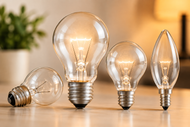
An incandescent bulb produces light by running electric current through a thin tungsten filament until it glows. A traditional incandescent lamp is different from LED and fluorescent lamps because it generates light by heating a tungsten filament within a glass envelope. Its relatively simple construction is one reason incandescent technology has remained useful in certain applications for well over a century.
In LEDs, light is created in a fundamentally different way, by passing an electric current through a semiconductor, converting electrical energy into light at a much greater efficiency than an incandescent filament. That distinction explains the current market split: LED now dominates general household lighting, while incandescent has remained the standard in the applications where its specific performance characteristics still matter.
Why Certain Applications Still Depend on Incandescent
Incandescent bulbs remain in use in specific applications because of measurable performance characteristics rather than simply legacy preference.
They dim smoothly and predictably across the full range, without the flicker or color shift that can appear in lower-quality LED dimming systems. They reach full brightness instantly, with no warm-up delay. They also tolerate applications where high operating temperatures can be a concern, which is important for certain appliance lamps. And their color rendering index sits at 100, the reference standard other light sources are measured against. In stage lighting, appliance lamps, and a range of other specialized applications, these characteristics are the deciding factor, which is why incandescent has held its position in professional and specialty lighting even as it has receded from general household use.
Where Incandescent Bulbs Are Still the Right Choice
A few categories account for most current incandescent lightbulb demand:
Stage and studio lighting: PAR56 and PAR64 sealed beam lamps remain standard in theatrical and professional lighting, largely for their dimming performance.
Aircraft, marine, and vehicle lighting: Specialized incandescent and sealed-beam lamps remain available for certain vehicle and marine applications, while rough-service versions use reinforced filament designs for applications exposed to vibration and shock.
Appliance lamps: Oven and refrigeration bulbs need to tolerate heat and cold extremes that shorten the service life of most LED components.
Candelabra bulbs: These are small in size and have decorative shapes that can be used in chandeliers, sconces, and other decorative fixtures such as those often used in hospitality applications.
Colored and speciality lamps: Incandescent technology can be obtained in colored and specialty versions for decorative, signalling, and other specific applications.
Rough service bulbs: Built specifically to withstand vibration and shock without filament failure.
If a fixture or application falls into one of these categories, incandescent is typically still the most practical option, and the right bulb is the one built for the application, not necessarily the least expensive one on the shelf.
Before You Order: The Specs That Determine Fit
Ordering the wrong incandescent bulb is a common and avoidable mistake. Four specifications determine nearly every purchasing decision:
|
Specifications |
What to Check |
|
Base Type |
Medium, candelabra, mogul, bayonet, mini wedge; must match the socket exactly, with no substitutions |
|
Voltage |
Match the lamp's rated voltage to the fixture and electrical system. Common incandescent lamps range from low-voltage specialty lamps to 120V/130V-rated lamps used in standard North American applications; the wrong voltage can reduce performance or shorten lamp life. |
|
Wattage |
Stay within the fixture's rated maximum, not just what the socket can physically accept |
|
Beam Spread |
Matters most for PAR and reflector bulbs; a narrow spot and a wide flood are not interchangeable, even at the same wattage |
Confirming these four specs before ordering can prevent many fit, performance, and early-failure issues.
The Bulk-Order Mistake Most Buyers Make
The most common bulk-order error isn’t choosing the wrong brand; it’s ordering by wattage alone and skipping the base type or voltage check. A 100W bulb in the wrong base or voltage is still the wrong bulb, regardless of how closely the wattage matches. That mismatch is what typically turns a routine restock into a return.
It's also worth noting that many incandescent lamps still available today are specialty products rather than high-volume general-service stock. Manufacturers such as SATCO continue to list incandescent products across categories including sealed-beam and rough-service lamps. Lead times can run longer than for standard LED products, particularly for less common voltage or base combinations. For facilities restocking on a schedule- a hotel, a restaurant, a theater- ordering ahead of need is more reliable than waiting until a fixture fails. Even when a product is sold individually, the specification still matters; getting it right the first time avoids unnecessary reordering and returns.
Conclusion
Sourcing the right incandescent bulb comes down to confirming a key specifications before you order: base, voltage, wattage, and beam spread. Lightbulb Wholesaler stocks a full range of sealed beam, specialty, and standard incandescent bulbs, with support available to match the right spec to your fixture before you place an order.
FAQs
Q1. What’s the difference between sealed beam and standard incandescent bulbs?
Ans. A sealed beam has the filament, reflector, and lens fused into a single sealed unit, making it significantly more durable in outdoor, vehicle, or high-vibration settings. Standard incandescent bulbs are simply the filament and the glass envelope, intended for use in a separate fixture and reflector.
Q2. How do I know what base type I need?
Ans. Check the existing bulb or the fixture's spec plate; the base type is usually printed directly on it. If not, measure the base diameter and note the contact style (screw, bayonet, or pin) to match it against a standard base reference chart.
Q3. Are incandescent bulbs still used in professional lighting?
Ans. Yes. Stage and studio lighting, appliance lamps, and vehicle or marine lighting all continue to rely on incandescent technology for its dimming performance, heat tolerance, and durability.
Q4. Do you sell incandescent bulbs to individuals, or only trade accounts?
Ans. Both. Retail customers and trade accounts order from the same catalog; trade and bulk accounts receive volume pricing on larger orders.